
What is desi khand? Khandsari sugar explained, from the open pan to your kitchen
Desi khand is khandsari: cane sugar crystallised in open pans, not in a refinery. What the word "desi" means on the label, how it is made, and how to cook with it.
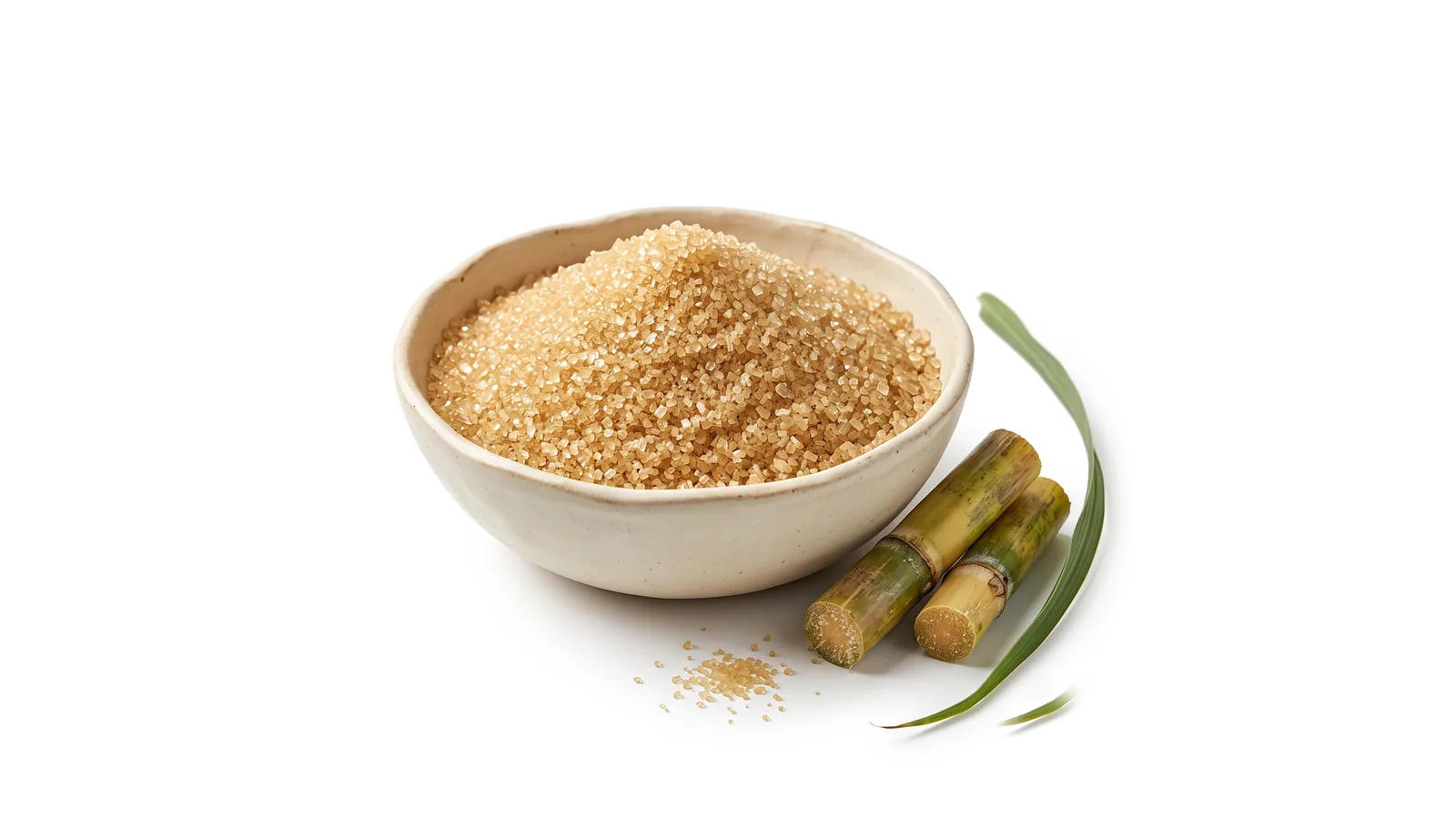
In short: Desi khand is khandsari sugar: sugarcane juice boiled in open pans until it crystallises, with the crystals then separated from the dark syrup and dried. The result is a cream to light-brown, granular cane sugar, milder than jaggery and less processed than white sugar. In Indian food rules, khandsari comes in two kinds, "desi" and "sulphur"; desi is the one made without sulphur.
Desi khand in one line
Think of three steps along one road. Gur keeps everything that was in the boiled-down juice. Desi khand separates the sugar crystals from most of the dark syrup around them. White sugar goes all the way, in a vacuum-pan mill, until only white crystal is left. How the three compare, together with bura and mishri, is set out in gur, shakkar, khand, bura, mishri and sugar. This page is about khand alone.
Desi or sulphur: the word that matters on the label
The Food Safety and Standards regulations define khandsari sugar as sugar made from cane juice by the open-pan process, and they name two varieties: "Khandsari Sugar Desi" and "Khandsari Sugar (sulphur)", also called sulphur sugar. Both may be sold as crystals or as powder.
| Khandsari desi (desi khand) | Khandsari sulphur (sulphur sugar) | |
|---|---|---|
| How the juice is cleaned | Skimming and a simple clarification | Sulphur dioxide is bubbled through the juice |
| Colour | Cream to light brown | Off-white to nearly white |
| Taste | Mild cane and caramel | Closer to plain sugar |
| How to tell | The word "desi" on the label, a warm colour | A very white crystal, "sulphur" on the label |
The regulations also set limits on moisture and on how much of the product must be sucrose. A good pack is dry and free-flowing.
So "desi" on a pack of khand is not decoration. It tells you the colour was left as the cane gave it. The same question, asked about gur, is on our page about sulphur-free jaggery.
How khandsari is made
- Crush the cane. Fresh cane is crushed between rollers, the same way it is for gur. The dry fibre left behind, khoi or bagasse, fuels the furnace.
- Clean the juice. The juice is strained and heated, and the scum that rises is skimmed off. For desi khand the cleaning stays that simple, with no sulphur; for sulphur sugar the juice is treated with sulphur dioxide to bleach it.
- Boil it down in open pans. The juice is boiled in a row of wide, open pans until it becomes a thick, heavy syrup that the units call rab. Up to here the process looks very much like gur making.
- Let the crystals form. Instead of being set into blocks, the rab is left to cool and rest, in tanks or troughs, until sugar crystals grow through it.
- Separate crystal from syrup. The crystals are spun out of the dark syrup in a centrifuge, turned by hand in small units and by motor in larger ones. The syrup that is spun away carries most of the colour.
- Dry and grade. The wet crystals are dried in the sun or in warm air, then sieved into an even grain and packed.
Desi khand, jaggery powder and sugar in the kitchen
| Desi khand | Jaggery powder (shakkar) | White sugar | |
|---|---|---|---|
| Colour it gives | A light cream tint | Golden to brown | None |
| Taste | Mild, clean cane | Caramel and cane | Sweet only |
| Grain | Granular crystal | Soft, fine grain | Even crystal |
| Good for | Chai, lassi, sharbat, pale sweets, everyday baking | Til laddoo, chikki, kheer, halwa, gur ki chai | Anything that must stay white |
| Swap by weight | 1 : 1 for sugar | 1 : 1 for gur | - |
How to cook with desi khand
- In chai and coffee: use it spoon for spoon in place of sugar. It dissolves almost as fast.
- In cold drinks: lassi, shikanji and sharbat take it well. Stir it into a little of the liquid first, then top up.
- In sweets: kheer, sooji halwa, besan laddoo and shakkar pare keep a lighter colour with khand than with gur, with a little more depth than sugar gives.
- In baking: swap it for sugar weight for weight. The crystals are a little larger, so for a fine cake crumb, pulse the khand in a dry mixie for a few seconds first.
- For a richer taste: mix khand and jaggery powder half and half, in chai or halwa.
How to judge a pack of desi khand
- The label: it should say desi khand or khandsari, list one ingredient, sugarcane, and carry an FSSAI number and a packing date.
- The colour: cream to light brown and a little uneven. A bright, paper-white crystal sold as "desi" deserves a second look.
- The smell: faint cane and caramel. A sharp, matchstick note is a warning sign.
- The feel: dry and free-flowing. Lumps mean the pack has taken in moisture.
Storing it
Khand holds less moisture than jaggery powder, so it clumps less, but the rules are the same: an airtight jar, a dry spoon, and a cupboard away from the stove. The longer version, for gur and khand alike, is in how to store jaggery.
Questions people ask
- What is desi khand called in English?
- Khandsari sugar. You may also see it sold as unrefined cane sugar or raw cane sugar, but khandsari is the precise name, and "desi" means it was made without sulphur.
- Is desi khand the same as brown sugar?
- No. Most brown sugar in shops is refined white sugar with molasses sprayed back onto it. Desi khand is crystallised straight from boiled cane juice and was never white to begin with.
- Is desi khand the same as jaggery?
- No. Both start as cane juice boiled in open pans, but jaggery is set with all of its syrup, while khand has its crystals separated from most of that syrup. Khand is paler, drier and milder.
- What is the difference between desi khand and sulphur khandsari?
- How the juice is cleaned. Sulphur khandsari is bleached with sulphur dioxide, which makes it whiter. Desi khand is cleaned by skimming and a simple clarification without sulphur, so it keeps a cream to light-brown colour.
- Can I use desi khand in tea?
- Yes, spoon for spoon in place of sugar. It sweetens like sugar with a slightly fuller cane taste and does not change the colour of the tea.
- Why is desi khand more expensive than sugar?
- Open-pan units recover roughly half as much sugar from the same cane as a mill does, and there are far fewer of them than there used to be. Less output from more cane means a higher price per kilo.
- How should desi khand be stored?
- In an airtight jar, in a cool, dry cupboard, with a dry spoon. Kept dry it stays free-flowing.