
Jaggery measurements: 1 cup, 1 tablespoon and 1 teaspoon in grams
How much a cup, a katori and a spoon of jaggery powder weigh, how to swap sugar for gur, and a calculator that scales a recipe to the packs you need.
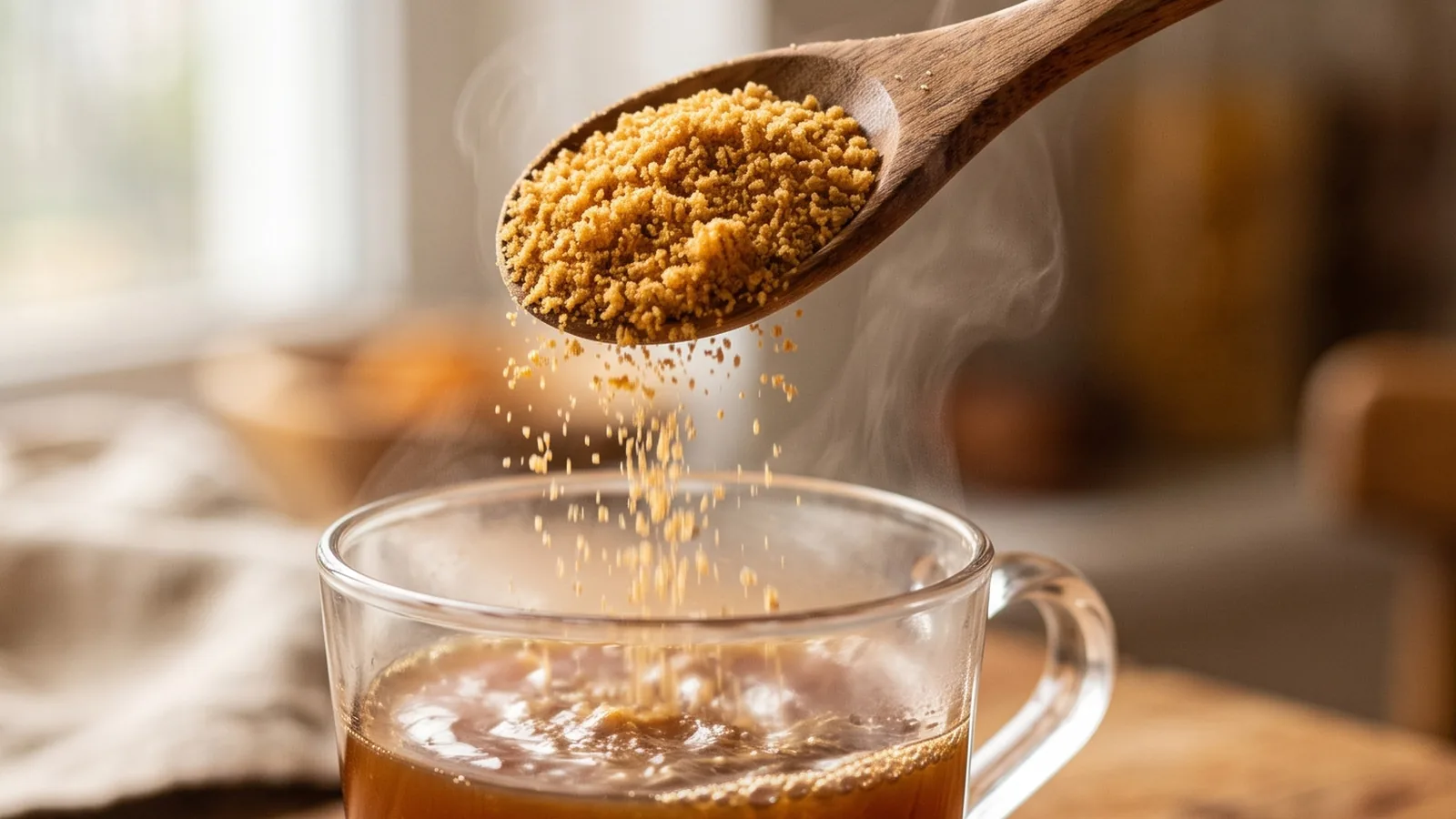
In short: One level cup (240 ml) of jaggery powder weighs about 200 g: as little as 150 g if it is spooned in loosely, and up to 240 g if it is pressed down. A tablespoon is about 12.5 g and a level teaspoon about 4 g. Grated block jaggery is lighter, about 150 g to a loosely filled cup. To replace sugar, use the same measure of jaggery powder.
The gur calculator on this page converts spoons and cups of jaggery powder to grams, swaps a sugar quantity for gur and scales a recipe to the number of packs it needs. It uses the figures in the tables below.
Jaggery powder: spoons and cups in grams
| Measure | Grams | Enough for |
|---|---|---|
| 1 teaspoon (5 ml), level | 4 g | One regular cup of chai |
| 1 teaspoon, rounded | 5 g | Half of the 10 g serving printed on our pack |
| 1 tablespoon (15 ml) | 12.5 g | A glass of sharbat |
| ¼ cup (60 ml) | 50 g | A small batch of chutney or a syrup for two |
| ½ cup (120 ml) | 100 g | Six gur ki roti |
| ¾ cup (180 ml) | 150 g | About 18 thekua or 15 til laddoo |
| 1 katori (150 ml) | 125 g | The steel katori most kitchens measure with |
| 1 cup (240 ml) | 200 g | Gajar ka halwa from 1 kg of carrots |
| 2½ cups | 500 g | One whole 500 g pack |
For powder scooped and levelled, the way most kitchens fill a cup. Spooned in loosely, a cup can be as light as 150 g. Pressed down firmly, it can reach 240 g. Every recipe on this site takes a cup as 200 g.
Why a cup is not always a cup
- The cup itself. Recipes on this site use a 240 ml measuring cup. A steel katori is usually about 150 ml, and a tea cup can be anything.
- How it is filled. Pressed down, gur packs like brown sugar, and published figures for a cup run from about 130 g to 240 g for exactly this reason. We scoop and level, without pressing.
- The form. Fine powder fills the gaps. Loosely grated block leaves air, so a cup of it weighs about 150 g.
- The weather. Gur that has taken on moisture is heavier and clumps.
For chai and everyday cooking none of this matters. For a sweet that depends on a syrup setting, such as chikki or til laddoo, weigh the gur. The stages of the syrup are in gur ki chashni.
Swapping sugar for jaggery
| The recipe says | Use | Remember |
|---|---|---|
| 1 tsp sugar in chai | 1 level tsp jaggery powder, or 1 cube | Add it off the heat |
| 1 cup white sugar | 1 cup jaggery powder (200 g) | Deeper colour, caramel taste |
| 1 cup brown sugar | 1 cup jaggery powder (200 g) | A straight swap |
| 100 g sugar | 100 g jaggery powder | Gram for gram |
| 1 cup sugar, in a cake | 1 cup jaggery powder | Hold back 1 tbsp of the liquid |
Jaggery carries its own taste. If it is new to you, start at three-quarters of the sugar quantity and work up over a week.
How long a pack lasts
A 500 g pack holds about two and a half cups, or about 125 level teaspoons. At two cups of chai a day with a teaspoon in each, that is about two months of tea. The serving printed on our pack is 10 g, which is two rounded teaspoons, so the pack says about 50 servings.
Questions people ask
- How many grams is 1 cup of jaggery?
- About 200 g for one level 240 ml cup of jaggery powder, scooped and not pressed. It can be as light as 150 g spooned in loosely, and up to 240 g pressed down firmly. A cup of loosely grated block jaggery is about 150 g.
- How many grams is 1 tablespoon of jaggery powder?
- About 12.5 g for a level 15 ml tablespoon, and up to 15 g if it is heaped or pressed.
- How many grams is 1 teaspoon of jaggery powder?
- About 4 g level and about 5 g rounded.
- What is the ratio of jaggery to sugar?
- One to one. Use the same weight or the same measure of jaggery powder as the sugar the recipe asks for. Jaggery tastes of caramel, so some people begin with three-quarters.
- How much jaggery replaces 1 cup of brown sugar?
- One cup of jaggery powder, about 200 g. The two behave alike in a batter.
- How many calories are in a teaspoon of jaggery?
- The energy value is printed in the nutrition panel on your pack, per 100 g. Divide it by 25 for a level 4 g teaspoon.