
Jaggery price per kg: what decides the rate of gur
Loose gur in a mandi and a packed jaggery powder can differ several times over per kilo. What you are paying for, how to compare two packs, and where to see the mandi rate.
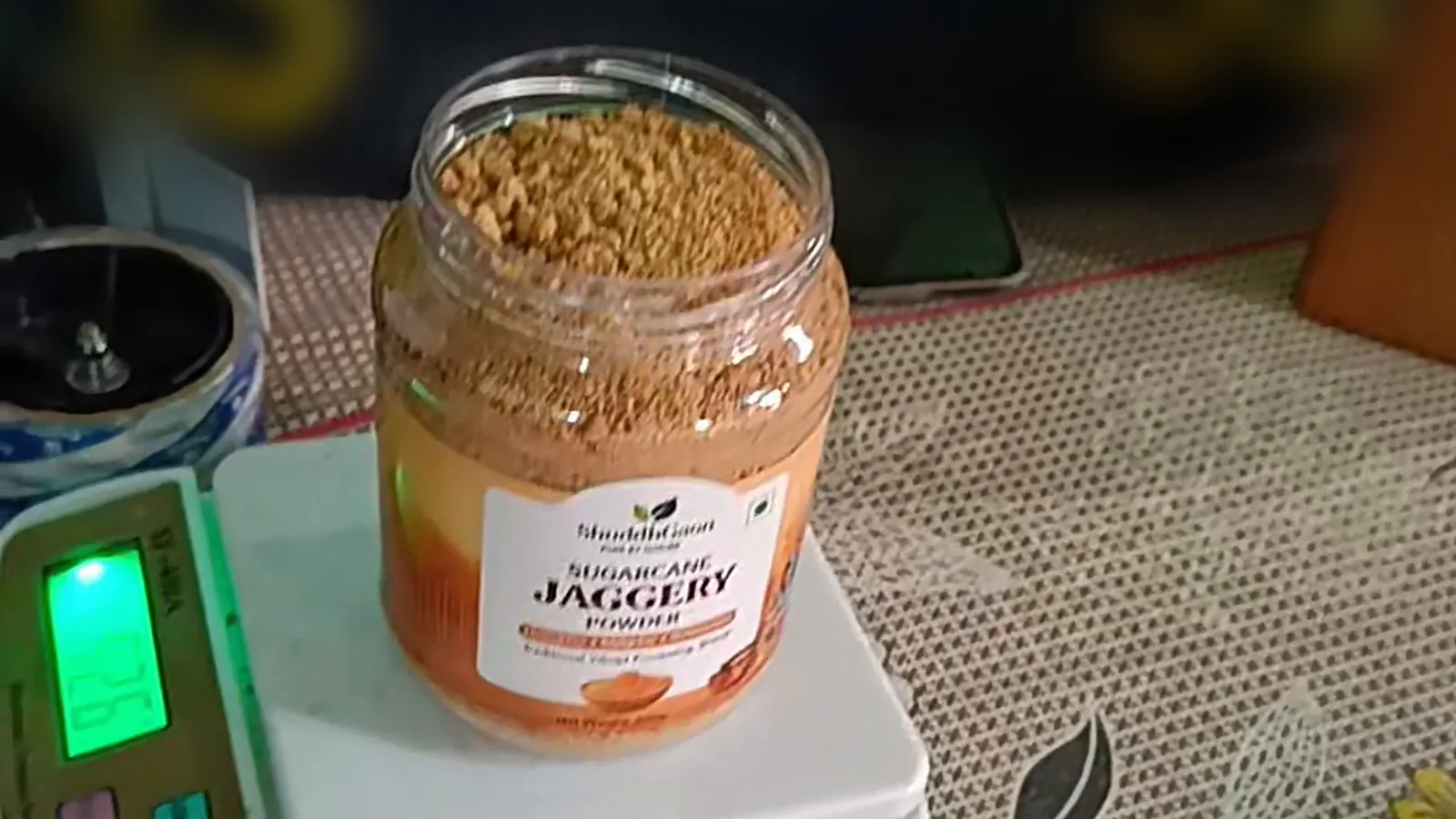
In short: The price of jaggery depends on the season, the form, how it was made and how it reaches you. Loose gur in a wholesale mandi is priced by the quintal and is cheapest in winter. A packed powder costs more per kilo because of drying, grinding, a food-grade pack and delivery. Compare the price per kilo, the ingredient list and the packing date, not the sticker alone.
What you are paying for
- The cane. Roughly ten kilos of sugarcane go into one kilo of gur. When cane costs more, gur costs more.
- The making. Juice that is skimmed patiently and not chemically lightened gives a little less gur, and a darker one. The trade has long preferred a pale golden gur, so a maker who works this way gives up both yield and the look the market pays for.
- The form. A block is set and sold. Powder has to be dried further, ground and sieved, and cubes have to be cut. Each step adds labour and loses a little weight.
- The pack. A food-grade jar or zip pouch, a printed label with a batch number and dates, and a food licence number. Loose gur comes without the pack and the label.
- The journey. Couriers charge by weight slab, so sending 500 g costs nearly as much as sending a kilo, and a marketplace takes its commission on top. On a small pack, delivery can be a large part of what you pay.
Mandi rate and shop rate
The "gur ka rate" quoted in a mandi is a wholesale price for loose, ungraded jaggery, per quintal of 100 kg. It moves daily with arrivals. The government’s Agmarknet portal publishes daily mandi prices for gur, market by market, including the big jaggery markets of western Uttar Pradesh. A household does not buy that way: it buys half a kilo, cleaned, packed, labelled and delivered. The two prices are not meant to match.
When gur is cheapest
In the north the kolhus run from about October into March or April. Fresh gur floods the market in those months and prices are at their lowest. Through the summer and the monsoon the trade sells from stored stock, and rates firm up until the new season starts.
How to compare two packs
- Work out the price per kilo. A 400 g jar and a 1 kg pouch cannot be compared by their sticker prices.
- Read the ingredient list. It should say sugarcane juice or sugarcane jaggery, and nothing else.
- Look for the dates. A packing date and a batch number tell you the maker keeps track of what was packed when.
- Compare the price you pay, not the discount. A large percentage off a high printed price tells you nothing about the gur.
- Count the delivery. A lower price with a delivery charge can cost more than a higher price delivered free.
What ours costs
Our prices are on each product page, with the price per pack, the MRP printed on it and the delivery charge for your PIN code shown before you pay. Delivery is free above the amount shown at the top of this site, which is why three pouches delivered together cost less per kilo than one.
Questions people ask
- What is the price of jaggery per kg?
- It ranges widely. Loose gur in a wholesale mandi is priced per quintal and changes daily. Packed, branded jaggery powder costs several times more per kilo, because it is dried, ground, packed in food-grade material and delivered. Our current prices are on our product pages.
- Where can I see today’s gur mandi rate?
- On Agmarknet, the Government of India’s agricultural marketing portal, which lists daily prices for gur by market. Rates there are wholesale, per quintal.
- Why is jaggery powder more expensive than a block of gur?
- Powder is taken a stage further. The gur is dried more, ground, sieved and packed airtight so that it stays free-flowing. A block is set and sold as it is.
- Why is jaggery cheaper in winter?
- Because that is when it is made. Cane is crushed in the cold months, so fresh gur is plentiful from about November to March.
- Is cheaper jaggery worse?
- Not always. Loose mandi gur can be very good. But a very low price for a packed product can mean cheaper inputs or shortcuts in the making. Read the label, and see how to check jaggery at home.