
Muzaffarnagar gur: the cane belt, the mandi and the GI tag
Western Uttar Pradesh makes more gur than anywhere else in the country. The districts, the market, the shapes the trade sells it in, and what the 2023 GI registration covers.
In short: Muzaffarnagar, in western Uttar Pradesh, is the centre of India’s largest jaggery belt and home to a gur mandi widely described as the biggest in Asia. "Muzaffarnagar Gur (Jaggery)" was registered as a Geographical Indication on 31 March 2023. The registered area takes in Muzaffarnagar, Baghpat, Shamli, Meerut and Bijnor.
The belt
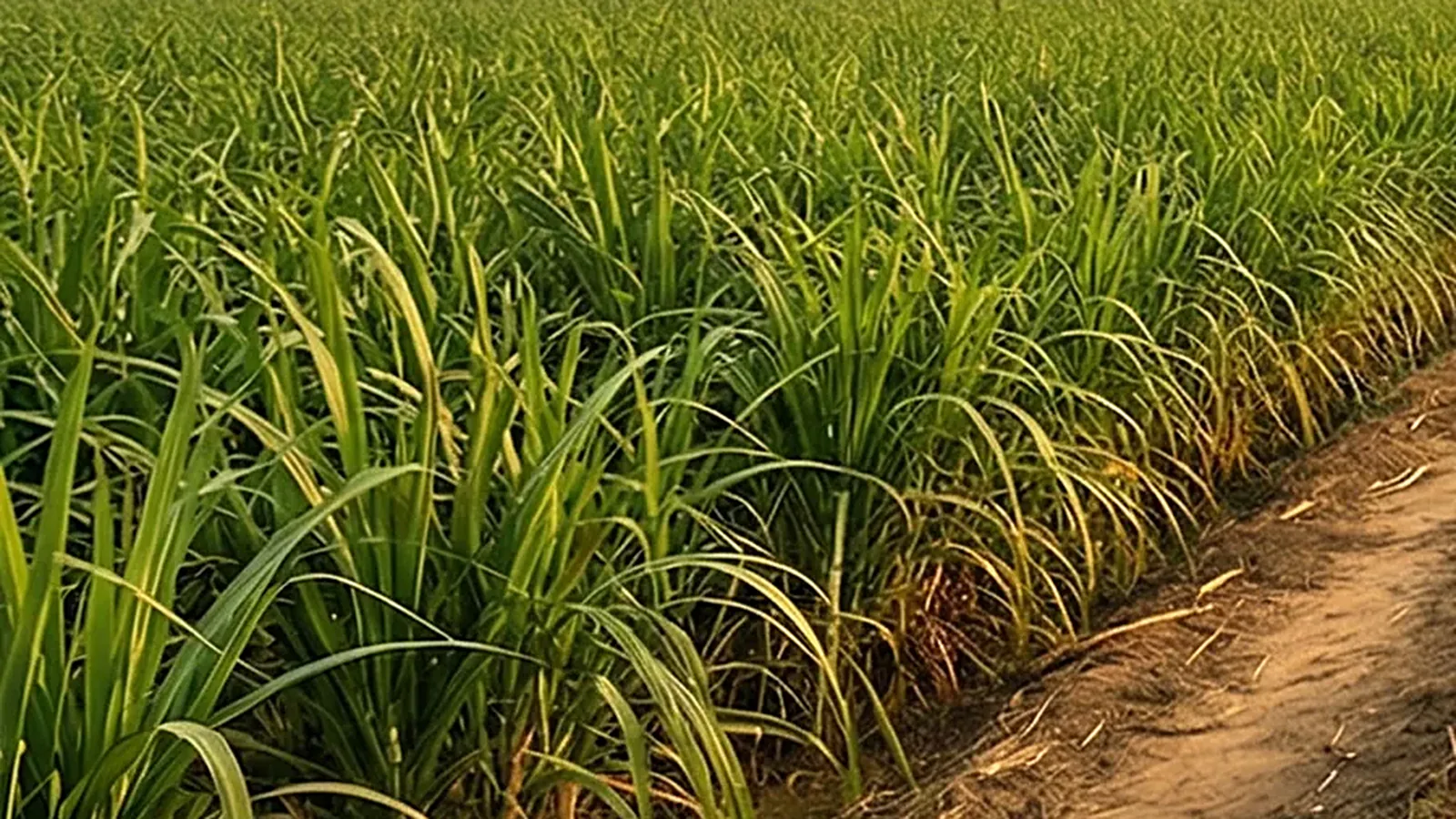
Between the Ganga and the Yamuna, in the far west of Uttar Pradesh, sugarcane is the crop that everything else is planned around. Mills take most of it. The rest goes to kolhus, the small open-pan units that turn cane into gur at the edge of the fields. Counts of them vary a great deal, from several hundred to about three thousand in Muzaffarnagar district alone, depending on who is counting and in which year.
The kolhus start around the first of October, a little ahead of the sugar mills, and new gur reaches the market within days. They run through the winter. Jaggery is also the product Uttar Pradesh has chosen for Muzaffarnagar under its One District One Product scheme.
The mandi
Muzaffarnagar’s gur mandi is widely described as the largest jaggery market in Asia. That phrase appears in the press and in the GI registration papers themselves. NABARD words it more cautiously, as the largest in India. Either way, it is where the price of gur for much of north India is made each morning, lot by lot.
The shapes it is sold in
The trade does not sell "jaggery". It sells shapes, each with a name and a weight, and each with its own price on the day. These are the ones listed in the GI registration.
| Name | Shape | Weight |
|---|---|---|
| Chaku (chakku) | A large trapezoidal lump | 10 to 20 kg |
| Balti | Set in a bucket | 10 to 20 kg |
| Dhansera | A large lump | 9 to 10 kg |
| Pansera | A lump | 5 to 6 kg |
| Chaukhanta | Four-cornered | 4 to 5 kg |
| Dhaiya | Half-round | 2 to 3 kg |
| Pari | A small slab | 1 to 2 kg |
| Khurpa (khurpa pad) | Small trapezoidal slabs | 250 to 500 g |
| Laddu | Small round lumps | 50 to 250 g |
| Shakkar | Powdered gur | Loose |
Shapes and weights as described in GI Journal No. 166. Shakkar is what the rest of the country buys as jaggery powder.
The GI tag
- Registered name
- Muzaffarnagar Gur (Jaggery).
- Application number
- 723, in Class 30.
- Registered on
- 31 March 2023 (Certificate No. 465).
- Registered proprietor
- Haritzone Farmers Producer Company Limited, Muzaffarnagar.
- Area
- Muzaffarnagar, Baghpat, Shamli, Meerut and Bijnor are named throughout the registration. Its papers name a sixth district inconsistently.
A Geographical Indication protects a name. Under the GI Act, the right to use a registered name, and its logo, on a product belongs to producers who have registered themselves as authorised users. Being inside the area is what makes a producer eligible to apply. It is not, by itself, permission to print the name on a pack.
How gur is cleaned here
The registration papers describe the traditional way of clearing the juice: with the mucilage of a plant called sukhlai, stirred into the pan so that the impurities gather and rise to be skimmed. Deola, a wild relative of okra, is used the same way elsewhere in the north. The alternative, which made gur pale and uniform and which this belt also knows well, is a chemical clarifier. That is the subject of our page on sulphur-free jaggery.
Where ShuddhGaon fits
Our cane grows in this belt, it is crushed on a village kolhu here, and we pack in Baghpat. We are not a registered authorised user of the Muzaffarnagar Gur GI, so we use neither its name nor its logo for our packs. How our gur is made is in how jaggery is made.
Questions people ask
- Does Muzaffarnagar jaggery have a GI tag?
- Yes. "Muzaffarnagar Gur (Jaggery)" was registered as a Geographical Indication on 31 March 2023, under Application No. 723.
- Which districts are covered by the Muzaffarnagar Gur GI?
- Muzaffarnagar, Baghpat, Shamli, Meerut and Bijnor are named consistently in the registration. Its papers name a sixth district inconsistently.
- Is Muzaffarnagar the largest jaggery market?
- Its gur mandi is widely described as the largest in Asia, including in the GI registration papers. NABARD describes it as the largest in India.
- When is the jaggery season in Muzaffarnagar?
- The kolhus start around the first of October and run through the winter. New gur reaches the mandi from late September or early October.
- What are chaku, khurpa and laddu gur?
- Trade shapes. Chaku is a large trapezoidal lump of 10 to 20 kg, khurpa is a small slab of 250 to 500 g, and laddu is a small round lump of 50 to 250 g.
- Is ShuddhGaon gur sold as Muzaffarnagar Gur?
- No. Our cane grows in this belt and we pack in Baghpat, but we are not a registered authorised user of the GI, so we do not use the name Muzaffarnagar Gur or its logo.
Sources
- GI Registry, Application No. 723, Muzaffarnagar Gur (Jaggery)
- NABARD, GI product details: Muzaffarnagar Gur
- GI Journal No. 166: Muzaffarnagar Gur (Jaggery), copy hosted by UP Krishi Vipran
- Uttar Pradesh One District One Product: Muzaffarnagar
- The Geographical Indications of Goods (Registration and Protection) Act, 1999